Why After-Hours Failures Usually
Start with Missing DocumentationAfter hours, most buildings quietly change personalities. Occupied service gives way to stewardship. But when a night goes sideways, it’s rarely because the technology failed. More often, it’s because no one was quite sure who owned what, what was supposed to happen next, or how that knowledge was passed along. Failures usually come from from missing context.
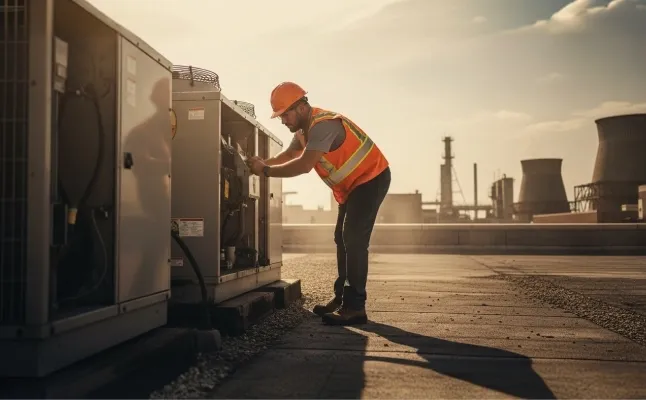
Take a rooftop unit. There’s nothing mysterious about its life cycle: installation, preventive maintenance, gradual decline, eventual replacement. But if they’re difficult to locate, maintenance decisions are delayed and budgets take a hit. Failures tend to happen at exactly the wrong time. The best stories don’t belong in emergency logs at 2 a.m. They belong in data that quietly tells you what’s coming next.
If you're tired of 2 a.m. surprises, see how we can organize your building's vital info. Book a Demo with ARC Facilities
After hours, buildings shift into reduced-operation mode:
- HVAC setbacks, dimmed lighting, tighter access control, armed alarms, and continuous refrigeration run overnight
- Energy use drops, but risk rises when schedules and overrides aren’t aligned
- Poor configuration often surfaces as morning failures
- Managing after-hours risk requires understanding how buildings operate when most staff aren’t present
“Asset tags, shutoff locations, equipment data, and vendor access reduce response time and errors. Without it, Facilities absorbs risk,” said Tee McClusky, Facilities Director, KFC.
After-hours work is supposed to be the quiet part of the day to handle tasks that would be disruptive, noisy, or impossible to do with people in the building. Shutdowns, valve work, intrusive inspections, generator runs, corrective fixes in high-traffic areas—all make sense to push into the off hours.
Where things usually break down isn’t the work itself. It’s the ending. A job gets “done,” but not fully closed out. A piece of equipment stays in hand. A safety gets bypassed. A valve never quite makes it back to its normal position. A fire protection impairment lingers longer than anyone realizes. By morning, the trail is cold, the shift has changed, and nobody can say with confidence what state the building is actually in. This is why documentation is critical.
After-hours work lives or dies on clarity: clear expectations, clear ownership, and a clear record of what was touched, changed, and verified. When that information is captured and handed off—not just remembered—organizations protect continuity, reduce risk, and avoid turning routine overnight work into the next morning’s emergency.
“Reactive maintenance at 2 a.m. isn't just expensive. It's lazy thinking disguised as urgency,” said Ronal Vargas, Industrial Electrician. “The real work isn't fixing what breaks. It's understanding why it broke in the first place. Since that last call in the middle of the night, I've built my entire maintenance philosophy around answering one question: What's the root cause, and how do we eliminate it? Not just patch it. Eliminate it.”
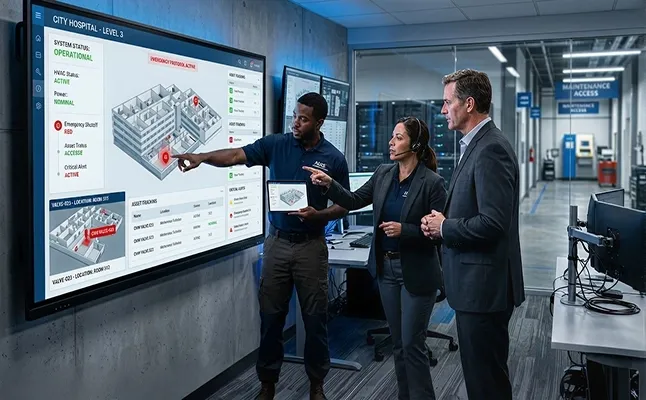
Building and equipment documentation is often the difference between containing an after-hours emergency and escalating it. When experienced staff aren’t on site and time is compressed, documentation becomes the decision-maker.
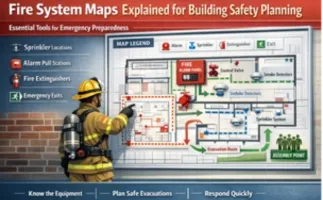
Clear access to floor plans, system layouts, and equipment details lets staff and first responders quickly understand what they’re dealing with without guessing in the dark or waiting for someone who “knows the building.” Water, gas, electrical, and medical gas shutoff locations are often the first question in an emergency. Accurate documentation eliminates wasted minutes searching or making risky assumptions.
After hours is when institutional knowledge gaps are most exposed. Documentation ensures emergencies don’t depend on whether the “right person” answers their phone at 2 a.m.