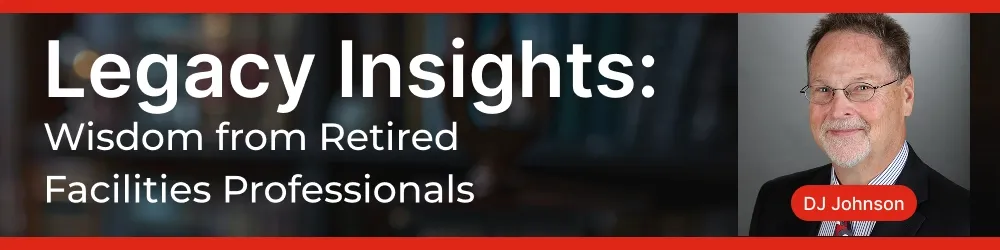
Big Budgets. Bigger Consequences.
How One CFO Mastered Complex Problem-Solving.DJ Johnson retired in March 2021 after a distinguished career as CFO of a major hospital system. He described his retirement as exactly what he envisioned: living abroad, learning a new language, experiencing different cultures, and embracing a lifestyle far removed from the boardrooms and spreadsheets of his professional life. Johnson now lives in La Paz, Mexico, where he balances cultural exploration with his passion for touring motorcycles.
Jack: What was the most challenging part of being a CFO in a large healthcare system?
DJ: Balancing the competing needs, wants, and budgets of multiple departments was by far the toughest part. Every department was vying for attention, resources, and capital, while also keeping patient needs front and center. On top of that, navigating insurance companies—who set complex rules and often put providers at a disadvantage—added another layer of challenge. Ultimately, the difficulty came from managing overlapping objectives among departments, the CEO, board members, and external stakeholders.
Jack: How did you manage such a complex environment?
DJ: Structure was key. We held staff meetings first thing Monday mornings to review the previous week, set priorities, and assign teams to specific projects. These sessions helped guide a week filled with meetings with the CEO, operations, facilities, and board members.
As a high-demand customer of facilities, coordinating new builds and operational expansions consumed a lot of capital and attention.
My days were long—typically 10 to 11 hours, with 11 to 13 meetings daily. I rarely had five to ten minutes to myself, even at lunch. Every moment was spent managing priorities, building relationships, or negotiating contracts. It was a constant race from start to finish.
Jack: How did the healthcare system’s complexity affect your role?
DJ: Healthcare is incredibly complex by design. The more complex it becomes, the harder it is for providers to navigate and get paid, while insurance companies gain an advantage. My job required constant adaptation—figuring out how to secure reimbursement, negotiate favorable contracts, and ensure operational efficiency.
Additionally, reporting lines could be complicated. Objectives flowed from the board to the CEO, then to me, while I also reported directly to one or two board members. Balancing multiple bosses with differing priorities required constant attention.
Jack: What role did technology play in your work?
DJ: Technology was absolutely critical. The CIO was one of the most important positions in the system, and I was fortunate to have an outstanding team. I even structured reporting so the CIO reported to the CFO, ensuring tight integration. Everything—billing, patient care, operations—relied on accurate, timely software systems. These, along with facilities and capital projects, were our largest expenditures.
Jack: How did you decompress outside of work?
DJ: Motorcycling became my escape. Touring motorcycles let me disconnect completely. When I lived in Seattle, weekends meant rides through the Cascades or mountain ranges, and vacations often involved multi-country tours in Europe, through the Alps or Dolomites. On a motorcycle, you’re part of the environment—you see, hear, and smell the world in a way that a car never allows. It’s also a great way to connect with people; strangers often strike up conversations at gas stations or small towns, sharing stories and experiences.
I wanted retirement to be a counterpoint to the high-pressure environment of healthcare finance. Riding motorcycles and exploring small towns, local eateries, and Airbnb stays offered exactly that—freedom, connection, and discovery.
Jack: How do you reflect on your career now?
DJ: It was challenging, complex, and often exhausting, but immensely rewarding. I learned to navigate competing priorities, manage enormous budgets, and rely on exceptional teams. Now, in retirement, I apply the same principles of observation, strategy, and problem-solving to exploring new cultures and landscapes.
Fun fact: Johnson enjoys immersing himself in new environments and emphasizes human connection, whether through a complex hospital system or a conversation at a roadside gas station while touring on his motorcycle.
Want more candid conversations like this? Tune into our Facility Voices Podcast.