When Severe Weather Hits, Facilities Teams Can’t Wait for Information.
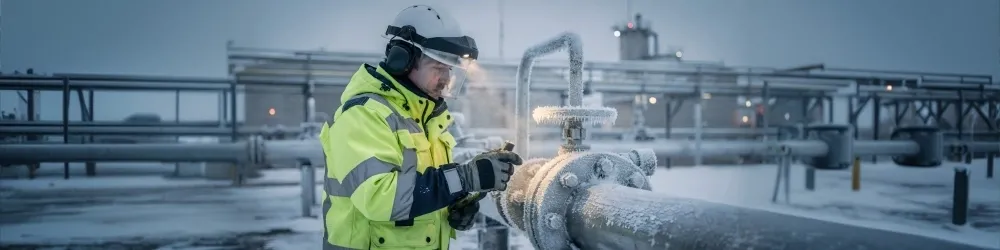
Emergency preparedness shouldn’t be something we only talk about after a major snowstorm, flood, or wildfire makes headlines. Before, during and after these events, facilities teams are on the front lines—working long hours, navigating hazardous conditions, and keeping buildings safe, operational, and warm.
These moments are a reminder that climate risk isn’t theoretical. It’s happening in real time. And when conditions escalate quickly, preparedness is less about reacting in the moment and more about whether the right information is already in the hands of the people responding.
When teams can quickly access plans, shutoffs, equipment details, and vendor contacts in the field—without hunting through binders or calling Bill, who retired but knows everything about the building—response doesn’t slow down. Tools like ARC Facilities support that readiness by making critical facility information accessible ASAP.
The Work Doubles When the Weather Turns
“When the winter weather hits, the work of a Facilities Management team doubles,” said Andrew Zippin, Senior Director, Facilities Management for JLL, supporting Google. “It isn't just about clearing the roads; it’s about ensuring that the heartbeat of our buildings—and the safety of our clients—remains uninterrupted.”
That doubling of work is felt across every type of facility. During severe winter weather, facilities teams are simultaneously responsible for:
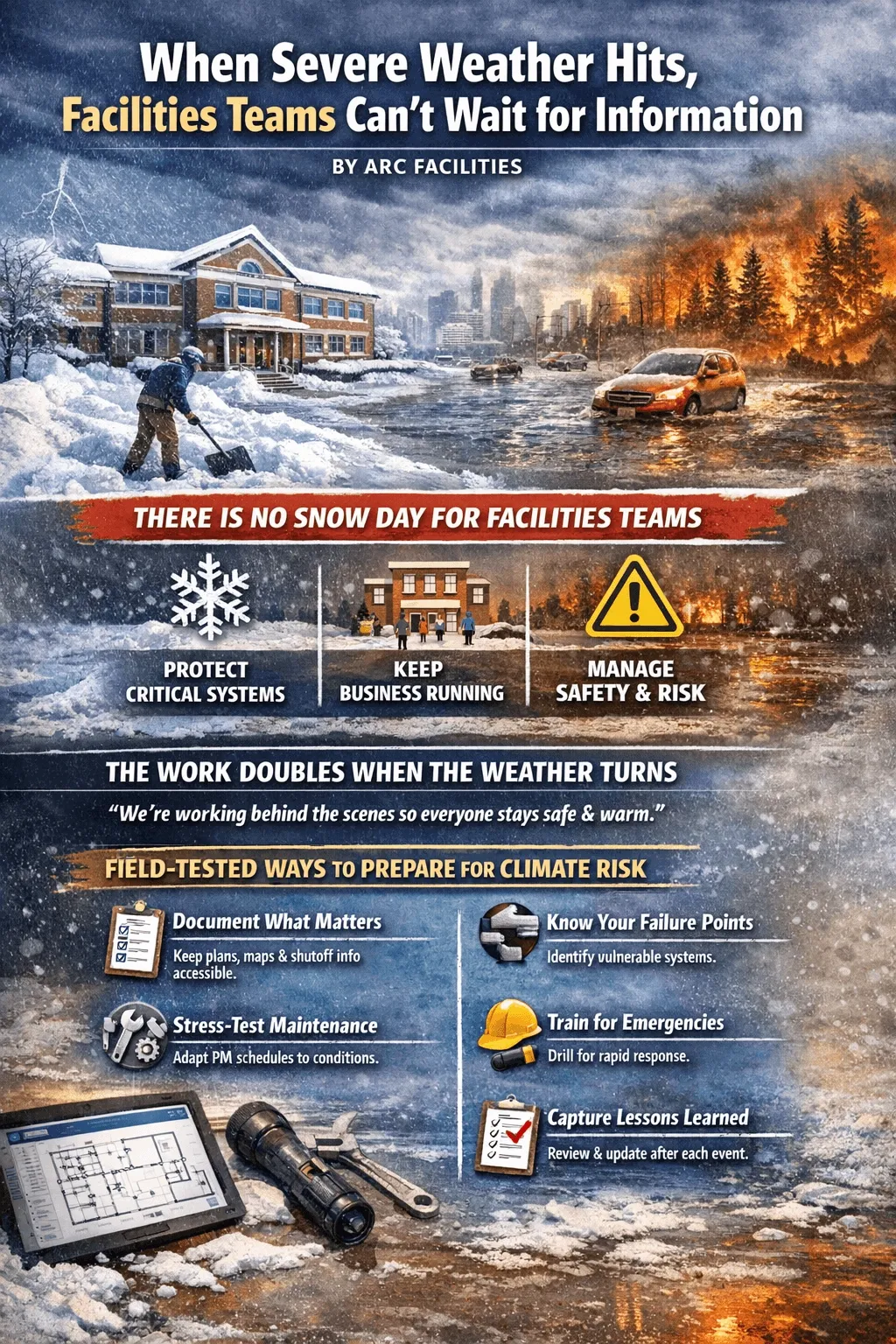
- Protecting critical systems by managing freeze-thaw conditions, keeping HVAC systems running, preventing pipe failures, and ensuring buildings can withstand prolonged exposure to extreme cold.
- Keeping business moving by working quietly behind the scenes so tenants, employees, students, and visitors enter spaces that are safe, warm, and ready for the day—often without realizing the effort required to make that happen.
- Managing safety and risk from the first salt spread on sidewalks to the final plow through the parking lot. Facilities teams are the front line when it comes to slip-and-fall liability, access issues, and overall site safety.
This work is constant, physical, and often invisible. Facilities management is, by nature, a behind-the-scenes profession. When everything works, no one notices. But during climate events, the stakes—and the strain—are unmistakable.
“There Is No Snow Day”
That reality is especially clear in school districts, where facilities teams ensure learning can continue safely no matter the weather.
“When I reflect back on the past couple of days and look at what my team had to overcome and endure to provide a safe environment for our students and staff, I must take time to acknowledge them for what comes so naturally,” said Timothy Mcferren of the Haddonfield School District. “Without hesitation, without question, my entire team comes through for our district when called upon. For us, there is no snow day, no shelter from the elements, no warmth from the home, and no staring out the window at the winter wonderland.”
Facilities teams “tackle the worst terrain and the most uncertain conditions to do a task that must be done,” he added. That dedication is echoed across healthcare, commercial, government, and industrial facilities every time severe weather strikes.
Five Field-Tested Ways to Prepare for Climate Risk Events
While no one can control the weather, facilities teams can control how prepared they are when conditions turn extreme. Here are five practical, field-tested ways to strengthen preparedness before climate risk events.
- Document what matters—before you need it: Keep plans, shutoffs, equipment details, and vendor contacts up to date and stored in one accessible place. Mobile access—such as through a platform like ARC Facilities—ensures teams aren’t searching through binders or guessing during an emergency.
- Know your failure points, not just your assets: Every facility has systems that are more vulnerable to cold, heat, flooding, wind, or power loss. Identify those weak spots and prioritize inspections, monitoring, and contingencies around them.
- Stress-test your preventive maintenance program: Calendar-based PM isn’t enough when climate exposure is increasing. Extreme conditions accelerate wear and failure, making it critical to adjust maintenance schedules based on risk—not habit.
- Train for disruption, not perfection: Weather-driven failures don’t always follow the playbook. Make sure staff and contractors know how to respond when systems behave unpredictably, especially after hours or with limited staffing.
- Capture lessons learned after every event: Post-event reviews matter. Document what worked, what didn’t, and what slowed response. Updating plans and documentation after each event reduces repeat issues and improves response times the next time severe weather hits.
A Moment to Recognize and Prepare
Severe weather events put extraordinary pressure on facilities teams, often without recognition. This moment is both a pause to acknowledge that work and a reminder that preparation makes all the difference when conditions deteriorate quickly.