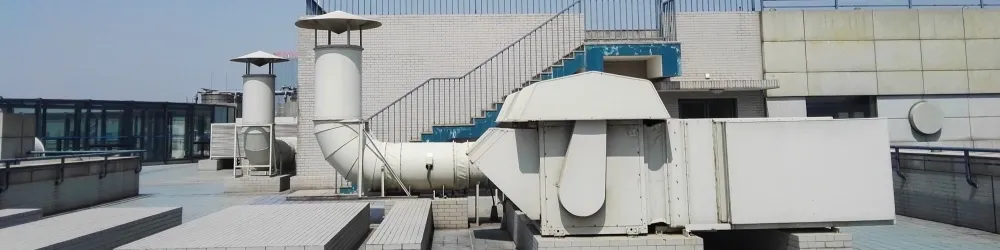
Why Hot/Cold Calls Are Really About Air Handlers
And What They Reveal About Your FacilitiesEvery facilities team deals with them: hot offices, cold classrooms, temperature complaints that show up in the work order queue every day. On the surface, hot/cold calls look like comfort issues. But in reality, they’re early-warning indicators that something deeper is happening inside your HVAC ecosystem—especially in your air handlers.
Air handlers don’t just move air. They set the entire foundation for how a building breathes, cools, heats, filters and balances occupant comfort. When something slips—filters clog, sensors fail, coils get dirty—the first people to notice aren’t the techs. It’s the occupants.
Hot/cold calls are simply the symptoms. The HVAC system is often the cause.
When a Hot/Cold Call Comes In, It’s the Start of a Diagnostic Chain
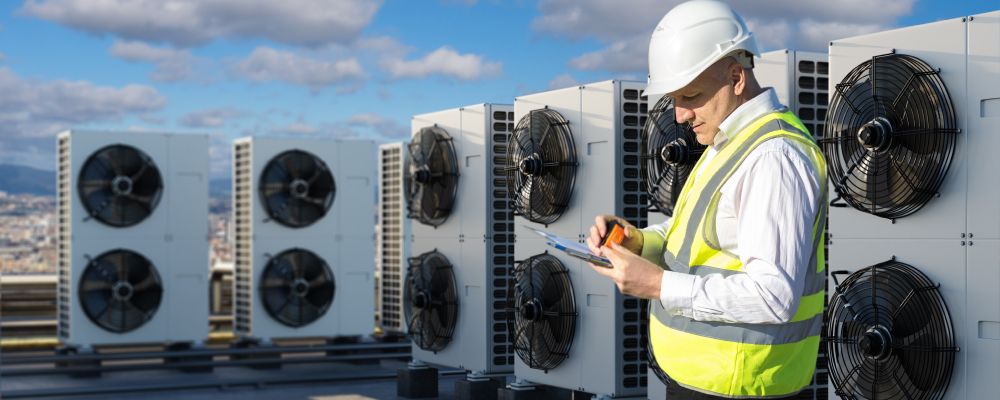
Temperature complaints usually point to one of a few root issues inside the air handler or its connected system:
1. Airflow Restrictions
Clogged filters, dirty coils, stuck dampers, or weak belts reduce airflow.
- Spaces close to the unit may feel too cold.
- Rooms farthest away warm up and trigger hot calls.
2. Faulty Temperature Control
Sensors that provide inaccurate readings, valves that fail, or reheat coils stuck open or closed destabilize the system.
The result: inconsistent zones and unpredictable comfort complaints.
3. Zoning and VAV Problems
One malfunctioning VAV box can make an entire wing uncomfortable—while the air handler appears to be operating normally.
4. Preventive Maintenance Gaps
Postponed filter changes or skipped inspections slowly erode AHU performance until the system itself becomes at risk of failure. It can be a snowball effect.
5. System Imbalance
Renovated rooms, new equipment loads, and tenant changes alter airflow needs. Without periodic rebalancing, hot/cold calls become chronic.
Why Asset Mapping Matters More Than Ever
Dean Stanberry, IFMA, explained it clearly:
“Hot and cold calls may feel like simple comfort complaints, but they are nearly always symptoms of deeper conditions within the HVAC ecosystem.”
The key to diagnosing these symptoms?
Knowing what connects to what.
Documented system relationships—AHU → duct branch → VAV → space—allow technicians to diagnose smarter and faster. ARC Facilities captures that knowledge permanently on mobile devices, so even when experienced staff retire, no one is stuck relying on ceiling tiles and Carl’s memory. The impact of the loss of institutional knowledge is explained on in this blog.
“The problem with popping ceiling tiles to explore possible maintenance is that there needs to be containment under the hole, so patients aren’t exposed,” said Joe Bucci, ABM Industries.
Stanberry noted that:
- Most occupants can only report the symptom, not the cause.
- A clear asset hierarchy dramatically improves troubleshooting accuracy.
- Correctly mapped HVAC systems (all components) and spaces build a powerful historical pattern of issues that support future capital decisions.
- Proper documentation reduces unsafe or unnecessary ceiling access and protects rating assemblies.
When these are not documented, organizations lose the opportunity to convert hot/cold calls from “annoyances” into operational intelligence.
“On a campus environment, starting point number one is an original set of drawings, showing what changes have been made,” said Bucci.
For more insights about the value of accurate documentation to bring new team members up to speed about your facility, check out this blog post: Learning to Love the Process.
Connecting It All Back to Air Handler Fundamentals
Hot/cold calls are the real-world feedback loop that tells you how well building systems are functioning.
Temperature complaints can be mitigated when:
- Assets are mapped
- Documentation is current
- PMs are up to date
- AHU components are accessible
- Work orders are linked to the right equipment
When those foundations are in place, comfort calls turn into trend data, trend data becomes insight, and insight leads to better decision-making.
The Bottom Line
Hot/cold calls aren’t interruptions.
They’re information.
And when paired with well-maintained HVAC Systems, accurate location mapping, and strong preventive maintenance practices, they become one of the most reliable diagnostic tools a facility leader has.
They tell you where small problems are forming, how your HVAC ecosystem is running, and where your next investment should be.
Book a demo with ARC Facilities to simplify asset mapping.