It’s Fire Prevention Month, How Well Do You Know Your Building?
Look beyond fire alarms, extinguishers and drills.A frozen pipe. Water pouring into a busy shopping mall. A maintenance technician sent to the wrong riser room.
It sounds like a facilities horror story, and it was. Fortunately, nobody was hurt. But the incident left behind a lesson that applies to every facility. When an emergency strikes, knowing your building can be just as important as knowing what to do.
During Fire Prevention Month, it’s worth looking beyond fire alarms, extinguishers and evacuation drills to consider a less obvious part of emergency preparedness: Do your team members and first responders know the building well enough to act decisively when something goes wrong?
A holiday freeze with a lasting lesson
Early in Geoffrey Boss’s career, while working in the maintenance department of an indoor shopping mall, a stretch of below-zero temperatures during the busy Christmas season caused a two-inch elbow on a fire line near the exterior roofline to freeze and burst.
The technician was directed to shut off the riser serving the affected area. Unfortunately, a senior maintenance colleague sent him to the wrong riser room. The water kept flowing.
After quickly moving to another riser room, the technician found a map that identified the correct riser. He shut it off, stopping the flow, and the team began several hours of cleanup.
The incident prompted a team huddle and a practical change. Maintenance staff reviewed which areas each riser served, and the technician volunteered to update the riser diagrams in every riser room, using current tenants as reference points. The team continued updating the diagrams whenever a new tenant moved in.
One emergency led to a better system, clearer information and a team that understood its building a little better.
The lesson wasn't simply to memorize riser locations. It was to make sure accurate information was available, current and understood by the people who might need it under pressure.
Bring first responders into the building before an emergency
Fire prevention and emergency preparedness shouldn't begin when the alarm sounds.
Geoffrey, now the Director of Property Management, Carnegie Management and Development Corporation, described a practice that starts shortly after construction is complete: bringing together local first responders, the tenant's safety team and leadership, and onsite maintenance staff for a guided property tour.
The goal is straightforward. Everyone gets familiar with the building's access points, key equipment locations and unique characteristics. First responders can ask questions, discuss potential scenarios and learn details that might otherwise be discovered only during an emergency.
That relationship matters. A building official may have inspected the property, but the firefighters and emergency personnel who respond to an actual incident also need firsthand familiarity with the site.
This is especially important in healthcare facilities, where building systems, medical equipment and the needs of patients and staff can add complexity to an emergency response.
The more first responders understand the property before an incident, the better prepared they are to work alongside the facilities team when the unexpected happens.
Fire prevention is about more than the fire itself
A fire creates obvious dangers, but the surrounding circumstances can complicate the response. Is the correct utility shutoff clearly identified? Are access routes known? Can responders locate hazardous areas and critical equipment? Are building plans current, and can the right people get to them in the field?
These questions deserve attention before an emergency.
Live-burn demonstrations offer another valuable perspective. Seeing fire behavior firsthand, understanding how quickly conditions can change, and observing the effects of a fire on a building can bring a new level of urgency to training. Reading a report is useful; witnessing the physical realities of a fire can make those lessons more tangible.
Facilities teams can build on that experience through regular walkthroughs, coordinated exercises, updated emergency procedures and ongoing conversations with local fire departments.
Make building knowledge part of the safety plan
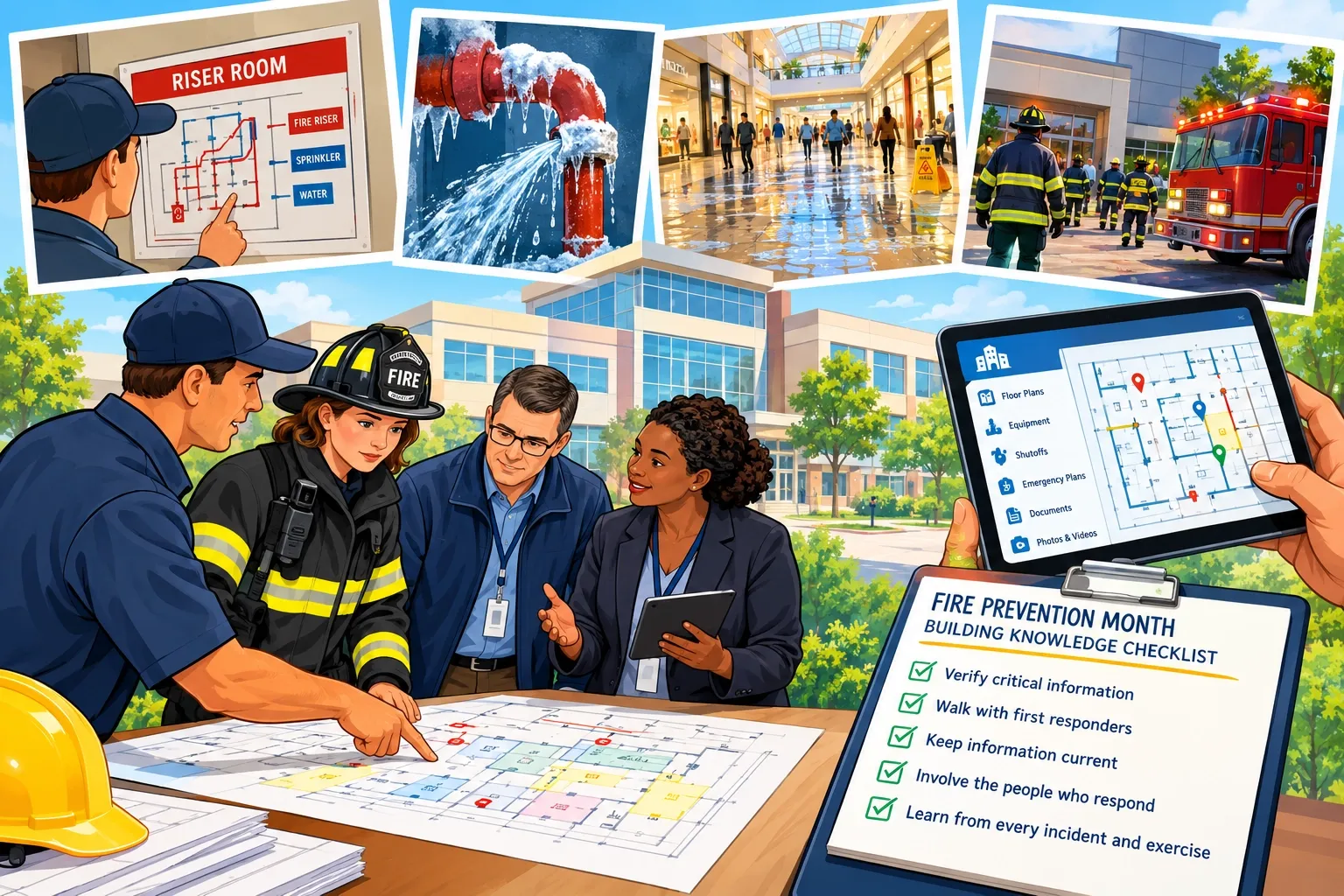
Here’s a basic Fire Prevention Month checklist:
- Verify critical information. Check that riser diagrams, floor plans, utility shutoffs and emergency procedures reflect current building conditions.
- Walk the property with first responders. Review access points, equipment locations, hazardous areas and building-specific considerations.
- Keep information current. Renovations, tenant changes and equipment replacements can quickly make older diagrams unreliable.
- Involve the people who respond. Maintenance technicians, security personnel, safety leaders and first responders should understand their roles and how they will coordinate.
- Learn from every incident and exercise. Turn observations into specific improvements, assign responsibility and follow through.
Using ARC Facilities for mobile access to current building plans and equipment information can also help facilities personnel locate critical details in the field, rather than relying on someone's memory or trying to track down a diagram while an emergency unfolds.