The Holiday Shutdown Checklist
What Happens to Your Building When Everyone Goes Home?Buildings don't recognize holidays. Mechanical equipment doesn't know it's Christmas, and water lines don't care that it's Thanksgiving. When buildings sit empty for an extended break, small problems can turn into major property damage simply because nobody is around to spot them.
Frozen pipes, water leaks, heating failures, roof leaks, and power outages can threaten buildings, equipment, and budgets. The best defense? A solid shutdown plan, clearly assigned responsibilities, and building information technicians can access when needed.
Leisha Lewis-Wilson of the Canadian Mental Health Association, Mike Bastian of OSF Healthcare, and Danny Torres of FacilityOps.AI shared practical advice for holiday preparedness. Here's their checklist.
1. Before You Close: Inspect the Building
A thorough walkthrough can catch small problems before they become expensive surprises.
- Check HVAC equipment, boilers, pumps, and building automation schedules.
- Test low-temperature alarms and verify notifications reach the right people.
- Inspect mechanical rooms, loading docks, roofs, drains, and vulnerable above-ceiling spaces.
- Check sprinkler freeze protection, plumbing, valves, and shutoffs.
- Address known equipment issues and document findings with timestamped photos and relevant readings.
How ARC Facilities can help: Staff can use ARC Facilities to review building plans, locate equipment, and check critical records before the shutdown.
2. Protect Against Freezing Temperatures and Water Damage
A building may register 65°F in one area while a water line near an exterior wall approaches freezing. Mike Bastian noted that serious damage can occur when frozen pipes thaw and ruptured lines release water for hours in an unoccupied building.
- Establish an appropriate minimum thermostat setting. Leisha and Mike recommend at least 55°F (13°C), subject to facility requirements and local conditions.
- Avoid aggressive temperature setbacks that put pipes or sprinkler systems at risk.
- Check vulnerable plumbing, confirm adequate heat, and verify alarms work.
- Increase inspections during extreme cold and ensure staff know how to isolate affected systems.
How ARC Facilities can help: Digitally mapped shutoffs and building plans help technicians locate the correct valve or mechanical area when leaks or freeze-related problems develop.
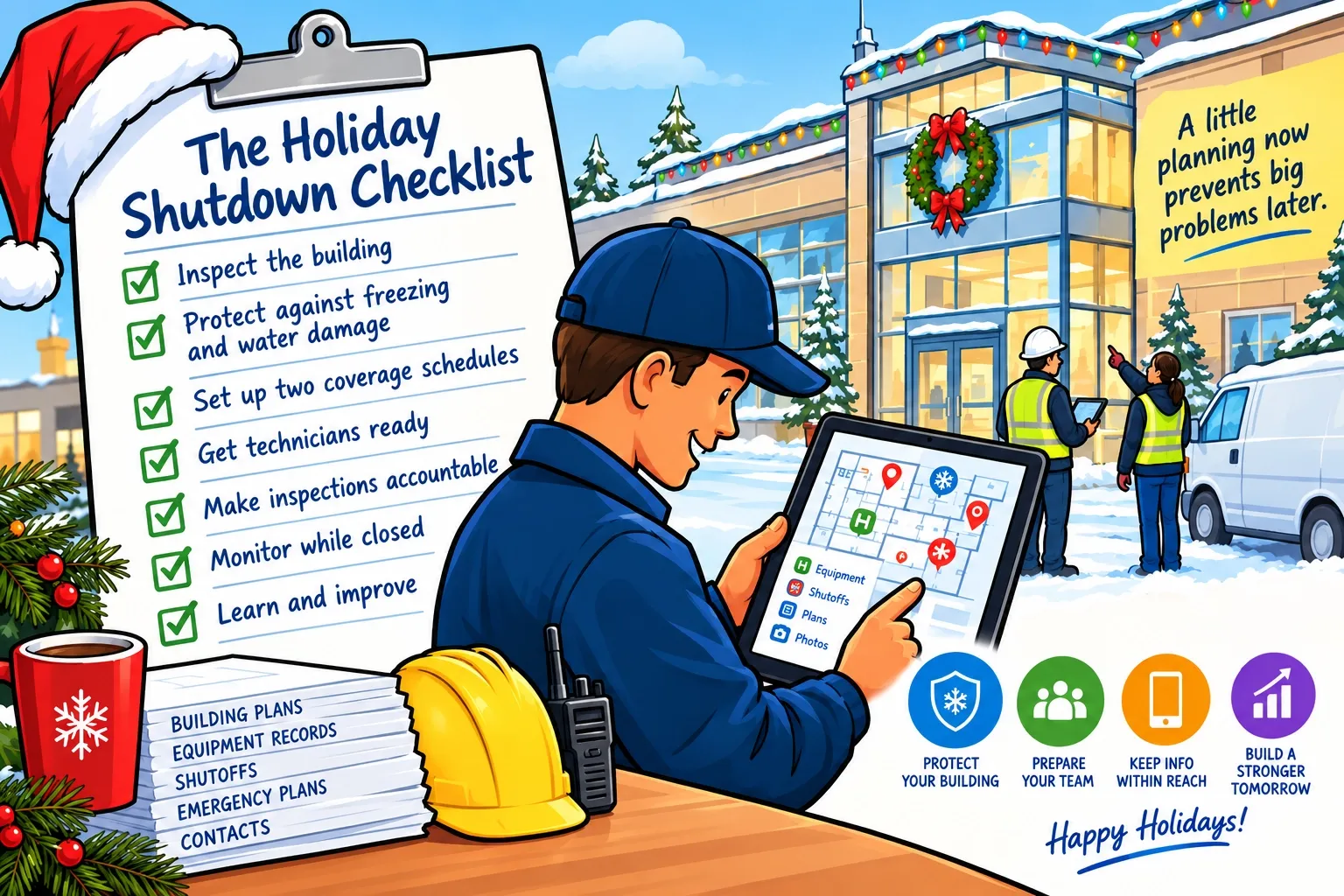
3. Create Two Separate Holiday Coverage Schedules
Having someone on call doesn't mean someone is actively checking the building. Both schedules are essential.
Holiday Staffing Schedule
- Identify employees physically working, their assigned buildings, and coverage hours.
- Define inspection responsibilities and who verifies completion.
- Increase inspection frequency according to building risk and weather conditions.
Holiday On-Call Schedule
- Identify primary and backup technicians, their trade expertise, and contact information.
- Establish response expectations and escalation procedures.
- List relevant supervisors, security personnel, contractors, and alarm contacts.
As Mike emphasized, one schedule identifies who's watching the building; the other identifies who responds when something goes wrong.
4. Prepare Technicians to Respond After Hours
A technician called at 2 a.m. about a ruptured water line shouldn't spend the first 30 minutes locating the mechanical room or figuring out which valve controls the water.
Before the holiday, ensure responders can access:
- Building drawings, floor plans, and mapped utility shutoffs.
- Equipment locations, model and serial numbers, and operating information.
- Alarm procedures, emergency instructions, and escalation contacts.
- Contractor details, restricted-area access instructions, and known trouble spots.
Experienced technicians may know which mechanical room struggles during extreme cold. That institutional knowledge needs to be documented and shared.
How ARC Facilities can help: Building plans, equipment details, photos, and mapped shutoffs are available on mobile devices, helping primary and backup technicians respond without depending entirely on a colleague's memory.
5. Make Inspections Accountable
Danny Torres highlighted an important distinction: completing a checklist isn't enough. Inspections need accountability and evidence people can act on.
- Assign an owner to every task and record completion.
- Document conditions with timestamped photos and relevant readings.
- Flag slow leaks, sticking valves, unusual temperatures, and water intrusion.
- Define who reviews findings, resolves problems, and escalates outstanding issues before closure.
Inspection records should tell the next person what was found and what needs attention.
6. While Buildings Are Closed: Monitor and Respond
- Confirm physical inspections follow the staffing schedule.
- Monitor automation alerts, low-temperature alarms, and other notifications.
- Keep primary and backup technicians reachable.
- Follow escalation procedures and record incidents and actions taken.
- Verify affected systems are safe before normal operations resume.
Don't rely on alarms alone. Physical inspections remain important, especially in vulnerable areas that general temperature readings may not adequately represent.
7. After the Holiday: Learn From What Happened
Treat every shutdown as a test of maintenance and emergency preparedness.
- Review failures, alarms, inspection records, and response times.
- Assess staffing coverage and inspection frequency.
- Investigate recurring problems, including insulation, air infiltration, heating deficiencies, and control issues.
- Update preventive maintenance and shutdown procedures.
- Document lessons, assign follow-up owners and deadlines, and share knowledge across the team.
As Leisha recommended, reviewing building automation logs and holding post-holiday debriefs can strengthen preparedness. The goal is to prevent recurring problems, not simply document inspections and repair damage.
How ARC Facilities can help: Keeping equipment details, building records, and field knowledge current helps teams carry lessons from one shutdown into future inspections, maintenance planning, and emergency response.
Before everyone heads home, make sure your building has a plan, your people know their roles, and your technicians have the information they need.