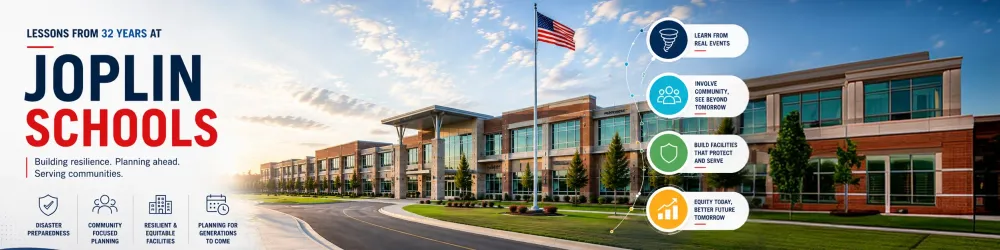
Lessons From 32 Years at Joplin Schools
Dave Pettit, Director of Facilities at Joplin Schools, spoke about his 32-year career with the district, disaster preparedness, long-range planning and the role facilities teams play in serving their communities, overseeing 1.8 million square feet across 21 buildings serving 7,800 students.
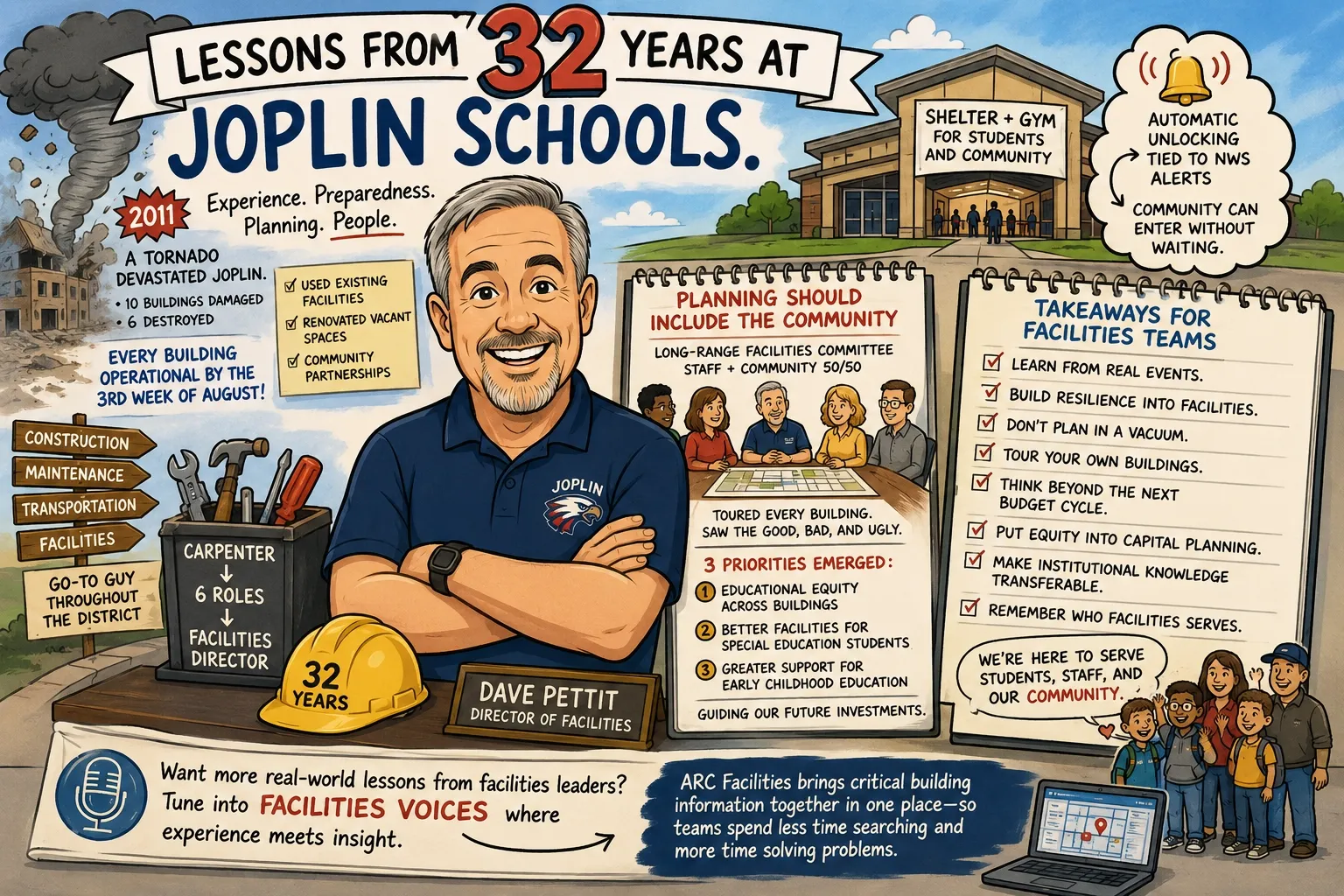
He started as a carpenter after working for a general contractor and moved through six roles before becoming facilities director. That experience gave him a broad understanding of construction, maintenance, transportation and facilities—and made him a go-to resource throughout the district.
Disaster preparedness: You can prepare, but you're never fully prepared
Dave's perspective on emergency preparedness comes from experience. In 2011, a tornado devastated Joplin, damaging 10 school buildings and completely destroying six.
Despite the destruction, Joplin Schools had every building operating by the third week of August. The district used existing facilities, renovated vacant commercial and industrial spaces and worked with community partners to create temporary campuses.
The experience also changed how the district thinks about preparedness. After reviewing what happened, the team reconsidered tornado procedures, including where students should shelter. With FEMA funding, the district built tornado-resistant shelters into school facilities, many designed as gymnasiums that can serve students and the surrounding community.
Some community shelters are equipped with automatic unlocking systems tied to National Weather Service alerts, allowing people to enter without waiting for staff to arrive.
Planning should include the community
Several years after the tornado, Dave helped establish a long-range facilities committee made up roughly equally of school staff and community members.
Over two years, the group toured every district building, giving members a firsthand look at the good, bad and ugly. The goal was to think beyond the next five years and consider facility needs 15, 20, 25 and even 30 years into the future.
Three priorities emerged:
- Educational equity across buildings, regardless of age.
- Better facilities for special education students.
- Greater support for early childhood education.
Those priorities now guide capital planning and investment.
Takeaways for Facilities Teams
- Learn from real events. Emergency plans should evolve based on what actually happens, not just what was expected to happen.
- Build resilience into facilities. Safety features can serve multiple purposes, such as tornado shelters that double as gyms or community spaces.
- Don't plan in a vacuum. Bringing staff and community members into long-range planning creates broader perspective and stronger priorities.
- Tour your own buildings. Seeing conditions firsthand can reveal issues that don't come through reports or presentations.
- Think beyond the next budget cycle. Facility decisions can affect students, staff and communities for decades.
- Put equity into capital planning. Building age shouldn't determine whether students receive the facilities and services they need.
- Make institutional knowledge transferable. Pettit's 32-year career illustrates the value of experience—but teams should also make sure critical knowledge doesn't depend on one person.
- Remember who facilities serves. The strongest FM programs connect maintenance, capital planning and emergency preparedness back to the people using the buildings.
Want to hear more from facilities leaders like Dave? Tune into Facilities Voices or conversations with professionals sharing real-world lessons, strategies, and ideas from the front lines of facility management.
ARC Facilities helps organizations put many of these proactive practices into action by bringing critical building information, equipment details, documentation, and operational knowledge together in one place, helping facilities teams spend less time searching and more time solving problems.