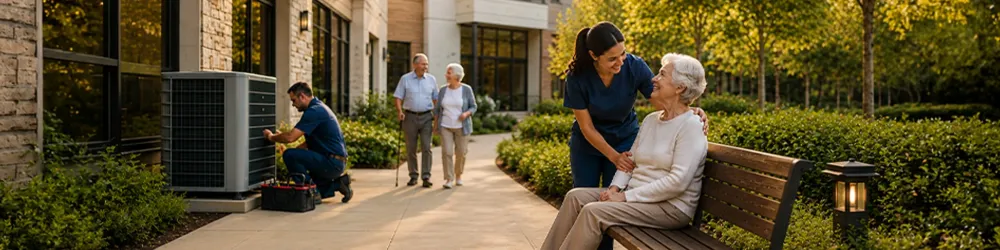
Senior Living Facilities Never Stop Operating
Every senior living community is built on the same promise: provide residents with a safe, comfortable place to live while giving families confidence that their loved ones are well cared for.
Keeping that promise depends on more than caregivers. It also depends on the facility itself.
“In retirement homes and facilities management you are always balancing different groups like the families, staff and residents. Each has a different priority. My approach is to get everyone aligned on the non-negotiables first -- safety, compliance and well-being. Impact vs urgency,” said Leisha Lewis-Wilson, Senior Facilities Manager, Canadian Mental Health Association. “Communication and transparency are the key. I make sure people understand why something is prioritized over another thing. It's important to have all the stakeholders aligned first.”
As America's population ages, more people are choosing senior living communities that allow them to maintain their independence while providing a clear path to assisted living, memory care, and skilled nursing if their needs change. For facility teams, that means supporting buildings that never stop operating and residents who are often more vulnerable to equipment failures, weather events, and disruptions than the general population.
Unlike many commercial buildings, senior living communities function around the clock. HVAC systems, plumbing, electrical infrastructure, fire protection systems, kitchens, elevators, generators, and life safety equipment must perform every day.
“Facilities in this community are different from other sectors as it is 24/7 a building and someone's home. It is not just a workspace. Every decision affects residents’ comfort and safety and can even produce anxiety if not planned properly. There is less tolerance for disruption,” said Leisha. “Working around residents it puts noise, timing and dignity front and center. I schedule disruptive work around quiet hours and high-volume activities. Everyone must be kept in the loop so there are no surprises.
Facility teams wear more hats than almost any other maintenance department. On any given day, they may respond to a resident comfort call, repair a plumbing leak, fix the TV, oversee a renovation, prepare for a life safety inspection, maintain the grounds, coordinate contractors, service fleet vehicles, or hang holiday decorations that make the community feel like home. Many are working with aging buildings, lean staffing, increasing operating costs, and managers responsible for multiple campuses.
The demands continue to grow. Communities are constantly renovating to remain competitive, regulatory requirements continue to evolve, and staffing turnover means institutional knowledge can disappear overnight. At the same time, adult children evaluating communities notice everything—from the appearance of the grounds to how well the building is maintained—because first impressions influence where families choose to entrust their loved ones.
In an environment like this, information matters.
When an HVAC unit serving resident rooms fails, a plumbing problem is reported, or an inspector asks to see documentation, facility teams don't have time to search for answers or wait for someone who "knows where everything is."
ARC Facilities gives senior living community maintenance teams immediate access to as-builts, O&M manuals, equipment documentation, warranties, life safety records, and other critical building information from any mobile device or computer. With the right information in hand, technicians can diagnose problems more quickly, coordinate repairs with confidence, support compliance efforts, and keep operations moving without unnecessary delays.
The result is about much more than maintenance efficiency. Less time spent searching means more time solving problems, fewer disruptions for residents, greater confidence during inspections, and better support for caregivers whose focus should remain on resident care.
“What makes all the hard work worthwhile is when someone smiles at you, and remembers your name, or when a staff member tells me a simple fix has made their day easier,” Leisha added. “I can start my day with the goal to be genuinely kind and do my best as the work I do impacts others.”
Senior living facilities never stop operating because the people inside depend on them every hour of every day. When facility teams have immediate access to the information they need, they can protect the buildings that protect the people who call them home.