How Space Center Houston Transformed Facility Operations with Digital Building Intelligence
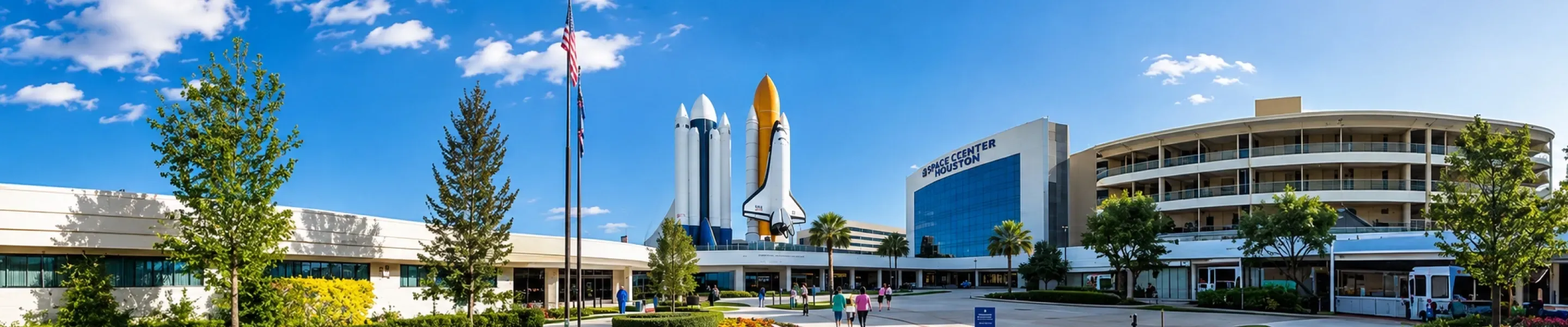
At Space Center Houston, space is the place but keeping that place running requires plenty of work on the ground. As the educational arm and visitor center for NASA’s Johnson Space Center in Houston, Space Center Houston welcomes more than 1.2 million guests each year. Opened in 1993, the facility is home to iconic experiences including Mission Control and the Neutral Buoyancy Laboratory. Behind the scenes, a diverse facilities team keeps the campus operating safely and reliably. Their responsibilities include daily operations, grounds, custodial services, maintenance, engineering, mechanical systems, tram operations, and major capital projects.
With decades of changes and upgrades, the team faced one fundamental question: How well do we really know the building?
Over nearly three decades, Space Center Houston accumulated enormous institutional knowledge. The problem was that much of it lived in people’s heads or in disconnected physical documents.
“We've made so many decisions over the last 30 years that none of them were documented.”
Drawings could turn up in unexpected places—inside closets, in storage, or even on top of an air handler. When an issue occurred, staff often depended on specific employees or contractors to know what was where and how systems worked.
That created operational risk. If there was an emergency in a particular zone, the answer might be as simple as calling the person who knew the system. But that approach wasn't scalable. The team needed to move from institutional memory to institutional knowledge—a centralized source of truth that could empower everyone.
Space Center Houston implemented a digital building documentation program to consolidate drawings, plans, equipment information, and operational knowledge into one platform. The goal was straightforward: centralize everything. Instead of returning to an office to search through files—or relying on someone else to remember where information lived—the team could pull up critical building information from the field.
That was especially valuable for a facility with a 250,000-square-foot roof requiring continual attention. The team could pin-drop roof leaks, document their locations, and associate them with work tickets, creating a clearer connection between facility conditions and maintenance work.
From Reactive to Ready
The transformation wasn't simply about digitizing documents. It changed how the facilities team worked. With information centralized, technicians no longer had to depend on scattered drawings or individual memory to understand the building.
They could pull up information:
- From the office
- From home
- Directly from the floor
- While responding to an active issue
That became especially important when Space Center Houston experienced a water main break. Because the team had already invested in documenting and organizing the facility, they could identify the relevant information and respond much faster.
What could have become a four- to five-day problem was resolved in roughly a day and a half. The difference came from preparation. By documenting the building in advance, the team reduced the time spent searching, coordinating, and figuring out what to do next when an issue occurred.
For Space Center Houston, the real value came from combining decades of knowledge with a modern digital footprint of the facility.
Instead of asking, Who knows what this valve does? the team can look it up.
Instead of sending someone back to the office, they can find the information where the work is happening.
As one team member put it, the goal was to ensure that information about the building was “in our hands.”
That shift gives the facilities team greater independence, better information in the field, and more confidence when responding to problems.
By consolidating its building information into a centralized digital platform, Space Center Houston has been able to:
Reduce reliance on individual knowledge
Critical information is no longer dependent on someone remembering it or knowing whom to call.
Improve emergency response
The water main incident demonstrated how readily available building information can shorten troubleshooting and resolution time.
Put information in the field
Technicians can pull up floor plans, system information, and operational details without returning to the office.
Connect documentation to maintenance
Pinpointing roof leaks and associating them with work tickets creates a more structured way to manage facility issues.
Create a digital footprint of the facility
Historical knowledge and current documentation now live together in a centralized environment.
Build greater operational resilience
The team is better equipped to handle issues internally rather than depending on third parties to diagnose every problem.
Space Center Houston exists to inspire people to explore beyond Earth. But that mission depends on a complex facility that has to work every day.
For the facilities team, digitizing the building has helped turn decades of scattered knowledge into an operational resource the team can use in the field.
The building is aging. The mission isn't.
And with the right information at their fingertips, the team can spend less time hunting for answers and more time keeping Space Center Houston ready for the millions of visitors who come to experience NASA's story.
Because at Space Center Houston, space is the place—and knowing the place is what keeps the mission moving.
Space Center Houston
Space Center Houston welcomes more than 1.2 million guests each year while maintaining a complex, aging facility that has evolved over more than 30 years.